
The GreenSoul project main objective is to achieve higher energy efficiency in public buildings by altering the way people use energy consuming shared devices (lights, printers) and personal devices (personal pluggable appliances). In order to achieve this goal, GreenSoul will apply a two-fold strategy:
- It will persuade users to increase their energy-awareness and change their e-consumption habits through a variety of techniques, from persuasive social applications to physical interaction mechanisms linked to the networked devices
- It will embed intelligence into the networked devices to allow them autonomously decide about their operational mode for energy efficiency purposes. GreenSouled devices will learn from users habits, acting only when wastefull energy behaviour is detected or users do not heed device suggestions
Main results
- Deployment of the GreenSoul solution in 7 heterogeneous buildings in 6 European cities, piloting during 11 months with more than 300 people involved. More information in D5.3 Pilot execution report.
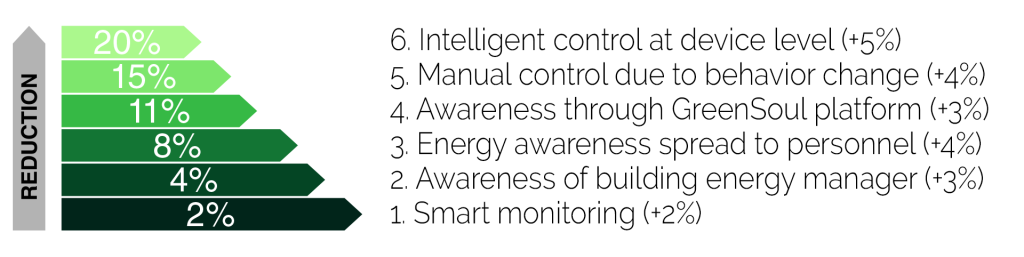
- GreenSoul achieved up to 23% energy savings. D6.3 Validation of the behavioural model and the persuasion and reaction mechanisms.
- GreenSoul end-users shifted to a more active green behaviour by 10.5%. D6.3 Validation of the behavioural model and the persuasion and reaction mechanisms
- Socio-economic energy-related behaviour has been identified as a significant challenge for buildings, especially those of public use. Within GreenSoul various aspects have been identified as factors that may influence occupant performance, both energy-related and socioeconomic based. These findings, translated into Persuasion Principles and/or Persuasion Strategies have been shared initially with the end-users of the GreenSoul pilots towards evaluating their importance for influencing daily energy-related performance. More information in D6.3 Validation of the behavioural model and the persuasion and reaction mechanisms.
- In order to decide the suitability of the actions carried out and produce design-insights and best practices, an assessment of the socio-economic impact of the results of the intervention was carried out. The assessment made is based on the Life Cycle thinking and comprises not only economic, but also environmental and social impacts. More information in D6.4 Evaluation Social and Economic Impact report.
“The GreenSoul project aims to surpass EU Energy Efficiency Directive energy consumption savings targets (-20% by 2020) with a low-cost energy-efficient ICT platform empowered with a set of assets (apps, interactive interfaces, device adaptors, smart meters and a Decision Support System (DSS) engine as well as a socio-economic and behavioural model which will jointly guide the energy consumption practices of public buildings. “
GreenSoul Platform Key Components
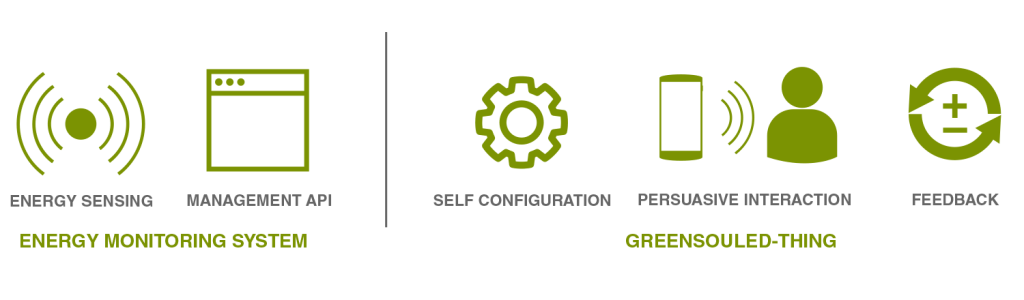
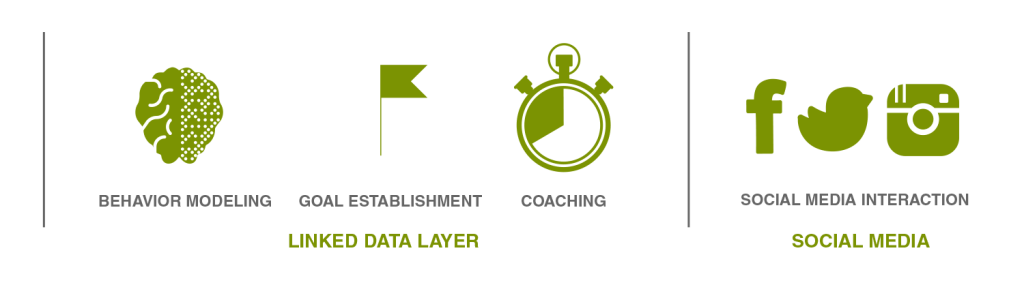
- Smart Analyzers that not only monitor and react, but also incentivise and persuade users to save energy
- Socio-economic behavioural model to motivate users to save energy
- Green-Souled Things with a Smart Adaptor that turn everyday appliances into user-friendly internet connected energy-aware things
- Mobile social and contextual apps that act as persuasive and incentivising interfaces that engage users in an enjoyable manner
- Analytics and Decision Support engine which learns about the energy consumption practices in an environment and takes different predictive and reactive actions to incentivise users or dynamically change the operation of energy consuming devices

Expected Impact
GreenSoul addresses objective EE-11-2015: “New ICT-based solutions for energy efficiency” of the Energy Efficient Buildings call of the H2020 work programme. In this topic, GreenSoul will contribute to the following impacts listed in the work programme:
- Systemic energy consumption and production and emissions reduction between 15% and 30%
- Fast deployment of innovative ICT solutions for energy efficiency
- Greater consumer understanding and engagement in energy efficiency
- Social media as multiplier hubs – GreenSoul will be linked to social platforms allows using them as dissemination channels for ICT solutions.

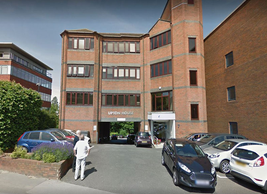
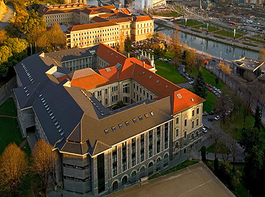
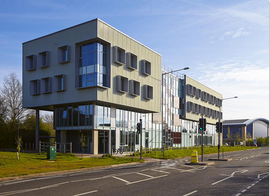
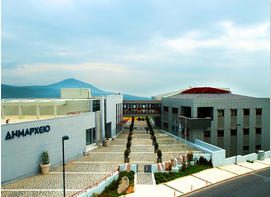
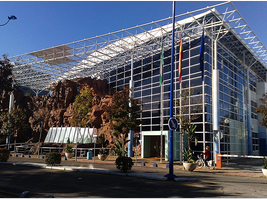
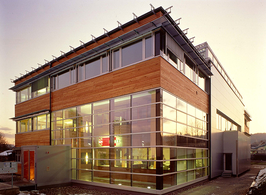
GreenSoul Project is being piloted at 6 public buildings in the UK, Spain, Greece and Austria
Pilot Buildings
Partners
GreenSoul Project is the result of collaboration between ten European companies, universities and research centers
 4ward Energy Research
  Allia
Allia  Cambridge Cleantech
 Ceres-Tech Spaces
  Inchirieri auto Iasi
  Universidad de Deusto
  Municipality of Pilea Hortiatis